What are the Best Natural and Organic Sunscreens in 2026?

A good natural sunscreen does the boring job well: it goes on evenly, helps shield skin from UV exposure, and reduces sunburn risk without a fuss. Mineral and organic formulas do that with filters such as zinc oxide and titanium dioxide, usually on a shorter ingredient list than conventional sunscreens, which is part of the appeal if you read labels.
I compared everything from Green People to Salt & Stone on SPF, broad-spectrum cover, water resistance, ingredients and sourcing, so you can pick one that suits your skin and your values rather than the prettiest tube.
We use affiliate links and may earn a commission if you buy through them, at no extra cost to you. See our affiliate disclosure and editorial policy.
Ahead of summer I worked through a shortlist of natural and organic options, looking at ingredients, ethical credentials, texture and how they behave on skin. Some I would happily reach for; a couple I would only put up with for the eco credentials. I have flagged which is which below so you can choose before you buy.
The Best Organic & Chemical-Free Sunscreens in 2026
Here is the shortlist I settled on. I checked the labels, the water-resistance minutes and the ingredient lists, and cut the ones that leaned on buzzwords more than substance.
My rule is simple, and I will not pretend otherwise: it has to protect properly first and be kind to the planet second. A spotless ingredient list is worth nothing if the cream slides off in the sea. The quick picks are in the table; my full reasoning for each sits below.

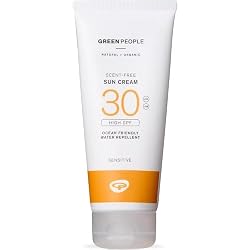
Overall Best Natural Sunscreen: Green People Scent Free Sun Cream SPF30

This is the one I would reach for first. Green People’s high-factor fragrance-free sun cream is built for sensitive skin, and it earns the top slot by being easy to actually use.
It does the things that matter on a beach day. Coverage is even, it holds up in the sea rather than sliding off after one wave, and it does not leave that chalky white film mineral creams are notorious for. The ethical, sustainable sourcing is a real bonus rather than the whole pitch.
It suits most skin types, goes on without a wrestling match, and keeps skin feeling moisturised rather than tight. If you want one reliable, eco-conscious bottle to cover the family, this is the sensible default.
Pros
- Plant-based packaging that is fully recyclable and reduces carbon emissions.
- Water-repellent and non-pore-clogging.
- Rich in natural antioxidants and made with certified organic ingredients, which is reassuring if sourcing matters to you.
- Supports marine conservation.
Cons
Can be harder to rub in than non-organic sunscreens, so give it a moment when you apply
That rub-in caveat is minor. Give it a minute to sink in before you head out the door, and for an everyday family bottle it is a fair trade for the clean ingredient list. If you only buy one from this list, this is the safe pick.
ALOE VERA, GREEN TEA & EDELWEISS naturally nourish and protect skin. Moisture-retaining for a longer-lasting tan and rich in antioxidants to protect skin from free radical damage. Protective Myrrh also assists in soothing skin
Best Organic Sunscreen for Children: Green People Organic Children Scent Free Sun Cream SPF30

This is the children’s version of the cream above, made for young sensitive skin and priced kindly. If the adult Green People works for you, this is the one to pack for the kids. The one thing to know is the white-cast trade-off: rub it in well or it can mark clothes, which is the usual price of a high-mineral formula.
Pros
- Ideal for sensitive skin
- broad spectrum protection with IVA and UVB filters
- moisturising and non-greasy
- Eczema friendly
- well reviewed for sensitive skin
- suitable for vegans
Cons
- Contains nano-particulate titanium, which may not qualify as natural for some people
- Can stain clothes
For most families that is an easy yes, as long as you keep it off the good clothes.

NATURAL & ORGANIC children’s sun cream provides broad-spectrum UVA & UVB sun protection whilst being gentle on skin. Mineral UV filters. Packed with 73% certified organic ingredients and packaged in a recyclable sugar cane plastic tube
Best Value Natural Sunscreen: Alba Botanica Sunscreens Sensitive Mineral Lotion SPF30

If budget is the deciding factor, this is where I would start. Alba Botanica gives you broad-spectrum mineral protection with up to 80 minutes of water resistance for noticeably less money. The formula is dermatologist-tested, hypoallergenic and gentle enough for sensitive skin, and it leaves out oxybenzone and octinoxate, which helps if marine impact is on your mind.
It also carries the Skin Cancer Foundation Seal of Recommendation, a third-party tick awarded to products that meet the foundation’s criteria for safe and effective sun protection. The catch, in my testing, is texture: it is on the sticky side and can leave a pale film, so it asks for a bit of patience when you rub it in.
Pros
- Broad spectrum protection
- Water-resistant (up to 80 minutes of water resistance)
- Dermatologist tested and hypoallergenic, so it suits most sensitive skin
- Biodegradable and cruelty-free, which helps if sustainability matters to you
- Free from oxybenzone, octinoxate, synthetic fragrances, nano particles, parabens, phthalates and sulfates
- Recommended by Skin Cancer Foundation
Cons
- Quite sticky and hard to apply evenly
- Can leave a white paste

Best Organic Sunscreen for Face: Organic Pharmacy Cellular Protection Sun Cream SPF30

This pharmacy-grade organic sunscreen is the most polished of the bunch on the face, with strong broad-spectrum cover and a properly hydrating finish. It is also the priciest, which is the only reason it is not the overall pick. What matters most here is the daily-wear finish, and nothing else on the list quite matches it. If your budget stretches and you want the nicest one to wear daily on your face, this is the best I tried.
Pros
- Intense Hydration
- Broad Spectrum Protection from both UVA and UVB rays
- Coral Safe
- Invisible and Non-Whitening:
- Suitable for Sensitive Skin, with a fragrance-light formula that most reactive skin tolerates well
- Key Ingredients like aloe, zinc, rosehip and calendula, chosen to soothe and condition the skin alongside the mineral filter
- High Organic Content
Cons
Not the cheapest, so one for when your budget allows
So this is a treat-yourself pick. If you want the nicest thing to wear on your face every day and the price does not put you off, this is the one worth the splurge.
Best Organic Sunscreen for Sensitive Skin: Blue Lizard

For reactive skin, Blue Lizard Sensitive Face Mineral Sunscreen is a dependable option. It gives broad-spectrum protection, and the brand states it blocks 97% of UV rays. It leans on zinc oxide and titanium dioxide as physical filters rather than absorbing chemical ones. If you are choosing between mineral and chemical for reactive skin, this is where mineral earns its place.
I have sensitive skin myself, and it did not sting or trigger breakouts, which is the bar that matters here. Two caveats worth weighing before you buy: it can leave a slight white cast, more noticeable on deeper skin tones, and the size choices are limited.
Pros
- Designed for sensitive skin.
- High UV protection against 97% of UV rays
- Reef-friendly: The sunscreen is free of Oxybenzone and Octinoxate
- Hydrating and nourishing
- Non-comedogenic
Cons
- White cast: Some users have mentioned that the sunscreen may leave a white cast on the skin, which can be noticeable, especially on individuals with darker skin tones.

Best Natural Mineral Sunscreen: Suntribe Natural Mineral Sunscreen SPF 30

Suntribe is a sensible, well-priced mineral sunscreen with a simple ingredient list, a pleasant coconut scent and a formula that suits allergy-prone skin. The trade-off to weigh before you buy: its water resistance is about 40 minutes, roughly half of the 80-minute creams here, so you will be reapplying more often in water.
Pros
- Safe and Eco-Friendly Packaging: Packaged in an eco-friendly sugar cane tube, reducing environmental impact.
- Tinted Formula: Lightly tinted for even blending and a natural appearance.
- Mineral UV-Filter: Provides broad-spectrum protection against UVA and UVB rays with non-nano zinc oxide.
- Reef Safe and Water Resistant: Does not harm marine ecosystems and offers reliable water resistance.
- Organic and Gentle: Formulated with organic ingredients suitable for sensitive skin, with a pleasant tropical scent.
- Simple ingredient list: Uses non-nano zinc oxide as the active filter, with no oxybenzone or octinoxate.
Cons
- Can leave a white cast
- Quite thick
Suntribe has had press coverage for its ocean-focused, reef-conscious approach, and the brand is unusually open about what goes in the tube. If transparency on sourcing is a deciding factor for you, that openness counts for a lot.

ORGANIC & GENTLE | Formulated with organic ingredients. Allergen-free and suitable for sensitive skin. Natural coconut scent.
Best Factor 50 Organic Sunscreen: NUURA Tinted Mineral Sunscreen – Factor 50+ Face
If you specifically want a factor 50 for the face and delicate areas, NUURA’s tinted mineral formula is the one to point you to. The tint does the quiet work of cancelling the white cast, which is usually the deal-breaker at this protection level. Here is what I checked on the label:
- High Protection: Nuura Tinted Sunscreen offers SPF 50 protection against both UVA and UVB rays. It helps shield the skin from harmful sun damage and reduces the risk of sunburn, making it suitable for the whole family, including individuals with sensitive, reactive, or fair skin.
- Tinted Formula: The sunscreen is lightly tinted, providing a natural and even-looking complexion while offering sun protection. The tint helps to even out skin tone and minimize the appearance of imperfections.
- Water-Resistant and Hypoallergenic: Nuura Tinted Sunscreen is water-resistant, making it ideal for sports and outdoor activities where sweating or water exposure is expected. It creates a physical protective barrier on the skin, ensuring long-lasting and reliable sun protection. The formula is hypoallergenic, minimizing the risk of allergic reactions.
- Natural and Biodegradable: With a 97.7% natural formulation, Nuura Tinted Sunscreen meets ISO nº 16128 standards. It is crafted with ingredients that are gentle on the skin and have a high level of biodegradability. The use of an aluminium tub also contributes to its eco-friendly profile.
Get on with it and you will find NUURA runs a wider range worth knowing about: the Body Emulsion Fluid, a kids’ version, a White Face Cream, a Tinted Face Cream, a White Sunstick and a Tinted Sun Stick. They all sit at SPF 50 with UVA, UVB and IR cover, so you can match the format to where you are putting it.
The Best Organic Sunscreen Spray: Laboratoires de Biarritz ALGA MARIS Sunscreen Spray Face and Body SPF30
When lotions feel like a chore, a good spray earns its place, and the Laboratoires de Biarritz ALGA MARIS SPF30 is the one I would pick. It pairs 100% mineral filters with Alga Gorria, a red algae extract included for its antioxidant content, so you are not trading protection for convenience.
The practical win is the nozzle: it sprays evenly whichever way you hold the tube, which makes the awkward spots like the backs of the legs far less of a contortion. The coconut and shea butter scent is a pleasant bonus rather than the selling point.
At SPF 30 it suits fair or sensitive skin well and gives adequate cover even in strong sun, and it works fine on medium skin tones too. If you spend a lot of time in fierce midday sun, you might prefer to size up the factor.
The active ingredients are worth a look if you like to check the label, and I did. Alga Gorria, that red algae extract, is there for antioxidant content, while the mineral filters, titanium dioxide and zinc oxide, do the actual broad-spectrum work against UVA and UVB rays.

Best Plastic-Free Natural Sunscreen: Sol de Ibiza Plastic Free – Face & Body Natural Mineral Sunscreen SPF30
If cutting plastic is the priority, Sol de Ibiza is the obvious choice here. It is a waterless solid SPF30 for face and body, built on 100% mineral filters with non-nano zinc oxide, so the protection is proper mineral cover rather than a green gesture.
Being a solid balm, it works differently from a lotion: you warm a little against the skin and smooth it in, which makes it surprisingly tidy for travel and easy to apply all over the body. There is nothing to leak in a bag, which is half the appeal.
It suits fair or sensitive skin best, though it copes on medium tones in strong sun too, and it gives broad-spectrum cover against UVA and UVB rays. As with most high-mineral formulas, take a moment to blend it so you do not leave a pale patch.
The formula leans on organic coconut oil, which moisturises and lends a soft coconut and shea-butter scent, plus organic sunflower oil for its conditioning, skin-softening properties. You will notice it feels more like a skincare balm than a duty-bound sunscreen.
The part I like most is the honesty of the package: natural and organic ingredients, non-nano zinc oxide as the filter, and plastic-free packaging that actually means it. If your sunscreen has been nagging at your conscience, this is a clean way to fix it.

Best Ayurvedic Sunscreen: Botanic Rain Organic Face Cream With SPF 30 With Rose & Eladi
This is the wildcard of the list, and an interesting one. Botanic Rain’s Ayurvedic SPF 30 face cream blends aloe vera, bijora and coriander, and uses Yashad Bhasma, a zinc-based mineral filter, for its broad-spectrum cover. One honest caveat: as an Ayurvedic product, its SPF testing may differ from EU-tested sunscreens, so I would treat the number as indicative and pair it with shade if you are out for long.
Pros
- Broad-spectrum cover: provides SPF 30 protection against UVA and UVB rays to help reduce sunburn risk.
- Youthful and Radiant Skin: The cream is enriched with Yashad Bhasma and vitamins C and E, which help neutralize free radicals and prevent skin damage, promoting a youthful and radiant complexion.
- Hydrating and Softening: Grape seed in the formula helps hydrate and soften the skin, leaving it supple and smooth.
- Anti-Aging Benefits: With its natural ingredients, including clove, the cream helps prevent early signs of aging, promoting a more youthful appearance.
- Fights Free Radicals: Coriander in the cream acts as an antioxidant, fighting free radicals and delaying the signs of aging.
- Even Skin Tone and Texture: Sarsaparilla in the formula helps even out the skin tone and smoothens the texture, resulting in a more balanced complexion.
- Added botanicals: Sarsaparilla is included as a traditional skin-conditioning ingredient.
- Simpler formula: Made with plant-based ingredients and free from parabens and sulfates.
- Suitable for All Skin Types: Whether you have oily, dry, sensitive, or combination skin, this cream is dermatologically checked and suitable for all skin types.
- Deep Nourishment: The cream gets absorbed quickly and provides deep nourishment, keeping the skin well-hydrated and moisturized.
Cons
Only contains 50g, so you will get through it quickly
If you are curious about Ayurvedic skincare and want a botanical face cream rather than a beach sunscreen, this is a pleasant way in. For long days in strong sun, keep one of the EU-tested picks above as your main line of defence and top it up through the day.
Best Natural Sunscreen for Babies: Babo Botanicals Baby Skin, Mineral Sunscreen Lotion, SPF 50

For babies the brief is narrow: gentle, fragrance-free, and high protection. Babo Botanicals’ Sensitive Baby Mineral Sunscreen Lotion SPF50 hits all three. It is made without fragrance or essential oils, which is exactly what you want on delicate skin, and it gives broad-spectrum SPF50 cover against UVA and UVB rays.
The formula is sensibly simple. Zinc oxide does the work as a physical filter that sits on top of the skin, and sunflower oil keeps things hydrated. The water resistance holds for up to 80 minutes, so it lasts through a paddling-pool session before you need to reapply.
The standout detail is how plant-based it is: 24 plant-derived ingredients, including the certified organic Nutri-Soothe Herbal Blend chosen to nourish and calm young skin. If you read ingredient lists before anything touches your baby, you will find this one rewards the effort.
For a baby, what matters is gentleness and a high factor, and on both counts this earns its place.

Best Organic Sunscreen for Acne Prone Skin: Organic Harvest Sunscreen SPF 60 PA+++ for Oily or Acne Prone Skin
Oily and acne-prone skin needs a sunscreen that does not sit greasily on top, and Organic Harvest is built for exactly that. It offers a high SPF 60 with PA+++, so the defence against UVA and UVB rays is generous if you want maximum cover.
The finish is matte and non-greasy, which is the practical reason it suits oilier skin types better than a rich face cream would. The brand also flags protection against blue light from screens, and the formula is water and sweat-resistant, so it holds up through a warm, active day.
On the ingredients side it leaves out sulphates and parabens, which tends to suit reactive skin. It is certified 100% organic and cruelty-free, so the ethical credentials match the formula rather than just the front of the box, which is the kind of consistency I look for.

Best Natural Sunscreen for Face and Body: Salt & Stone SPF 50 Mineral Broad Spectrum

Want one bottle that does the lot? Salt & Stone SPF 50 Mineral Broad Spectrum is the all-rounder I would reach for on both face and body. It gives strong cover against UVA and UVB rays and adds real hydration, so it does not leave skin feeling tight.
The formulation is its strong suit. It uses non-nano zinc oxide as a physical filter, so it sits on the skin and reflects UV rather than absorbing it, and it is fragrance-free, which keeps it sensible for reactive skin.
Texture is the bit that wins people over: non-greasy, it sinks in without leaving white residue, which is rare at SPF 50 mineral. Water and sweat resistance holds for at least 80 minutes, so it stays put through a proper day outdoors.
The clever touches are the hyaluronic acid and rosehip seed oil, which soothe and moisturise so skin does not dry out under the sun. It comes in a tidy 88ml bottle, which is handy for a bag but worth noting if you are covering the whole family, as you will get through it quickly.

How to Choose the Right Organic Sunscreen for Your Needs
Forget the front of the box. After comparing this lot, my advice is blunt: get the protection right first, and treat everything else as a tie-breaker. Run through these checks before you buy and you will dodge almost every disappointment.
- Look for Certified Organic Products: Check for certifications like USDA Organic or COSMOS Organic to ensure that the sunscreen meets specific organic standards.
- SPF Level: Consider the Sun Protection Factor (SPF) level you need based on your skin type and the amount of sun exposure you anticipate. SPF 30 or higher is recommended for adequate protection.
- Broad-Spectrum Protection: Opt for a sunscreen that offers broad-spectrum protection, meaning it shields your skin from both UVA and UVB rays.
- Match it to your skin: dry skin loves shea butter or hyaluronic acid; oily, acne-prone skin wants a light, non-comedogenic formula; reactive skin does best on fragrance-free mineral. The picks above are already sorted on exactly this.
- Ingredient List: If you want a mineral formula, check the active filters are zinc oxide or titanium dioxide rather than absorbing filters such as oxybenzone or octinoxate.
Exploring the Natural Ingredients in Organic Sunscreens
If you like to know what each ingredient is actually doing, here is the quick reference I keep coming back to. The two minerals do the protecting; the rest are there to condition and soothe.
| Natural Ingredients | Benefits |
|---|---|
| Zinc Oxide | Provides broad-spectrum protection |
| Titanium Dioxide | Offers broad-spectrum protection |
| Coconut Oil | Moisturizes and provides natural sun protection |
| Shea Butter | Nourishes, soothes, and protects the skin |
| Green Tea Extract | Neutralizes free radicals and offers some UV protection |
| Aloe Vera | Soothes sunburned skin and aids in recovery |
| Jojoba Oil | Moisturizes and protects the skin |
| Vitamin E | Protects against free radicals and UV-induced damage |
The Difference Between Chemical and Organic Sunscreens
The split is simpler than the labels make it sound: one type absorbs UV, the other reflects it. Neither is automatically better, but they behave differently on the skin. For my money, mineral is the safer default for children and reactive skin; if you cannot stand the faintest white cast and your skin never complains, a chemical filter is a fair shout. The real question is which behaviour you can live with day to day.
- Chemical Sunscreens: These sunscreens contain chemical compounds like oxybenzone, avobenzone, or octinoxate, which work by absorbing UV rays and converting them into heat that is then released from the skin. Chemical sunscreens are usually thinner and more easily absorbed but may have a higher risk of skin irritation and allergies for some individuals.
- Organic Sunscreens: Organic sunscreens use mineral-based ingredients like zinc oxide or titanium dioxide to form a physical barrier on the skin, reflecting and scattering UV rays away from the skin’s surface. They are often a good fit for sensitive skin and offer immediate protection upon application. They also tend to leave out oxybenzone and octinoxate, the filters most often linked to coral reef damage.
Tips for Applying Organic Sunscreen Effectively
The best sunscreen is the one you apply properly. Most people use far too little, which is the single biggest reason a high SPF underperforms. This is where good sun protection is won or lost, so these habits matter as much as the bottle you pick.
- Apply Generously: Use enough sunscreen to cover all exposed skin. For the face, a 5p-sized blob is a good guideline, and for the body, aim for about two tablespoons (roughly a shot glass) to get the protection on the label.
- Reapply Regularly: Remember to reapply sunscreen every two hours or more frequently if you’re sweating or swimming, even if the sunscreen is labeled as water-resistant.
- Don’t Forget Often Missed Areas: Pay attention to commonly overlooked areas like the ears, back of the neck, tops of feet, and the area under the straps of swimwear or clothing.
- Give It Time to Absorb: Apply sunscreen at least 15 minutes before sun exposure to allow it to fully absorb into the skin.
- Pair with Other Sun Protection Measures: While sunscreen is essential, it’s also important to seek shade, wear protective clothing, and use hats and sunglasses to further shield yourself from the sun’s harmful rays.
You can browse more of our tried-and-tested natural products in the Plankton for Health shop.
A note on safety
This article is general information about choosing sunscreen, not medical advice. Sunscreen helps protect skin from UV exposure and reduces sunburn risk, but no sunscreen blocks all UV, so pair it with shade, clothing and sensible timing. If you notice a new or changing mole, a patch of skin that will not heal, or any other sun-damage concern, please see a GP or pharmacist.
Last reviewed: June 2026. Read about how we research and write in our editorial policy.

Cara Hayes is an experienced natural health practitioner with a Masters in Clinical Nutrition & Dietetics from the University of Sydney. She has been writing for Plankton for Health since 2019 and contributes widely to many well-known health publications.